
How Does One Explain Dissociative Identity Disorder to Singlets?
Being a plural person is a mind-bending experience that even I don’t understand.

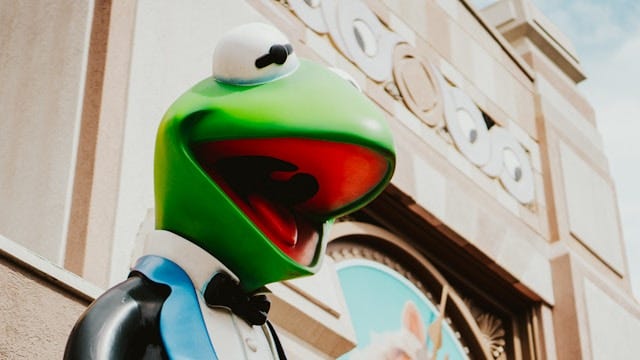
Nicholas Fuentes on Unsplash
Over a year ago, I was standing in the hallway of the homeless shelter where my family and I were living, quietly but forcefully hissing at my alters to get the f**k out and leave me alone because “y’all aren’t real”.
First of all, it isn’t normal to yell at supposedly non-existent parts, especially if one thinks they’re not real; however, logic is not at a premium when one is a 53-year-old stressed-out and overstimulated homeless autistic being confronted daily with evidence that they likely have Dissociative Identity Disorder.
As soon as I commanded the parts to leave, in my mind’s eye, Muppets, as though Kermit had called them to action, scattered to the wings of their TV show theater stage.
This image that was sent to me was reminiscent of the classic Jim Henson humor that we’d adored so much when we were young (so much so that we’d had a poster of The Muppets on our bedroom wall for years).
Our love for The Muppets is also why we initially chose The Mahna Mahna System as our TikTok username.
About that image of the Muppets that I saw, as I said, my available portion of our consciousness didn’t conjure up that image; it was sent to me as a message from my alters.
The message was, we’re still here whether you accept that fact or not. I can’t explain it any better than that.
How can I explain to other people what it feels like to be sent a thought that you know is not yours? It’s like explaining to a cis man what it’s like to be pregnant.
How can I explain what it feels like to feel masculine for the first time in your life when a male part fronts and suddenly takes over the body?
How do you explain that when he first fronted, after having split from another alter in the intense crucible of stress that was trying to scrape enough money together to leave the shelter, you closed your eyes and there, in block letters, was his name, Max.
It was the name of my late dog, which I found weird, but months later, when I asked a system friend why, of all names, he would have picked that name, they incredulously asked me, “Didn’t you love your dog?”
I’ve shared before that my system discovery journey did not start with the homeless shelter, though it did accelerate it.
I first started noticing how much I dissociate shortly after my autism diagnosis nearly five years ago.
When I rewatched TV shows, I would quickly realize I had missed so many details, even though I was certain I had paid attention.
I also noticed that when I was asked about the details in certain superhero movies, I had no recollection of the plots because I just hadn’t been there.
In hindsight, I attributed my dissociation solely to undiagnosed autistic sensory overload and went on my merry way. However, these experiences continued to nag at me, even as I was in denial of my amnesia.
Soon, I began to realize that I might be forgetting an abnormal amount of my son’s childhood because entire years were fuzzy. Some of those years had been so traumatic that, for the most part, they were virtually blanked out.
I often felt like I had to reach far into the back of my head to retrieve memories that my spouse could readily access. He expected me to remember them as well, and I just didn’t.
I would cover up the fact that I had struggled to put these memories together or that it felt as though someone had passed that memory on to me like a baton.
As I’ve written before, shortly after the memory loss became more apparent, child parts began to front after my functional neurological disorder attacks.
My son and spouse noticed nothing unusual about me talking in a child’s voice, which I thought was weird because it was freaking me out just a bit.
However, both of them figured I was just being my usual goofy and playful autistic self. My son has only ever known my fronting alters, so it is hard for him to see the DID because the other alters were masking the DID and were pretty covert.
Those who cared for him as a child are the only mothers he has ever known. After all, we’ve been parenting him for almost two decades.
Once our lives as a family became emotionally untenable because we never got a break from the hamster wheel of financial stress, I began experiencing what is colloquially known as “amnesia for amnesia,”. I didn’t notice the moments I was missing were gone.
Many times my family and I would ride past locations in our neighborhood that we’d driven by for 6 years, and I would frequently ask if a building was new or had been changed. Only to be told no, it had always looked that way.
I would say to myself, “ Wow, I am so autistic and stuck in my own head. I am so monotropic. My ADHD has me so distracted.”
But it was more than that.
I was shaken at every revelation that I was losing so much time and did not have good access to many of my memories. For the first time, the memory loss was happening in real time and repeatedly being shoved in my face by my kid.
Shortly after that, repressed memories of childhood sexual abuse surfaced. My memories of it are not explicit but rather mere fragments of benign but foreboding visuals as well as somatic and implicit memories.
Implicit memories are when your repressed trauma is triggered, and you have no conscious idea why.
For me, the FND helped me to recognize that I was (and am) remembering trauma because when you suddenly fall to the ground for no apparent reason, you realize pretty quickly that something triggered you.
We—me and the alters that hold our trauma—are pretty sure the perpetrator was one of our extended family members.
At least I’ve been convinced of this fact on and off for decades, and some child parts have confirmed this is true.
However, I don’t know what I’m supposed to do or feel about the forgotten abuse that my body, and a crying child in my head, remembers.
How do you explain the doubt that creeps up, that maybe you convinced yourself that you have DID? How do you explain how it consumes you every day, and that that’s a part of having the disorder?
The doubt is supposed to keep the system safe, even though secrecy is no longer tenable or helpful for the system’s mental health once it’s discovered.
Almost every day, at some point, we decide the system isn’t real, only to be confronted with evidence that it is. It’s a see-saw, yo-yo effect that frequently keeps us on an emotionally uneven keel.
It’s like being Bill Murray in Groundhog Day, and once again having to go through being depressed because we decided our alters are not real.
It’s not understanding why you’re depressed, because why would somebody want this disorder? It’s feeling weirded out by the elation and euphoria you feel when you go back to believing in your plurality.
It feels wrong to feel euphoria, but is it truly euphoria, or is it recognition, relief, and even fear? I mean, it is a condition forged in unrelenting trauma which you don’t remember, so why wouldn’t someone be afraid?
That’s another thing you question all the time: why you would develop such a serious mental health condition because certainly your trauma wasn’t that bad.
But you don’t remember it, so how would you know?
You know you are afraid, but don’t want to admit it. You don’t want any of it to be true, but a part knows these things are true, and its knowing is bleeding into you. You tell yourself you’re not afraid.
Why do I now have Yoda from The Empire Strikes Back in my head, forebodingly hissing, “You will be.”?
Does the elation come from your parts appreciating the fact that you’ve finally acknowledged them? Maybe some of them are happy, like the littles, but definitely some littles are not because they hold significant, unspeakable trauma.
Perhaps those who carry the most burden are the protectors and gatekeepers, or those who doubt we’re a system do so because they don’t want it to be true.
Is it the host that is happy to finally figure out why life has been so hard, because autism alone still didn’t explain their challenges? Or are more alters involved in this feeling of selves-acceptance?
Probably all of the above and more that we may be unpacking for years to come.
The euphoria is love. You're showing love to parts of yourself when you acknowledge they exist.
"Real" is a strange word. The important distinction is whether it's a good mental model.
By the way, "having a thought that's not yours" is probably relatively common; we're just not trained to notice it because we don't realize it's possible. Similar to how the left brain will make up reasons for actions that were clearly initiated by the right brain*, because saying "I don't know why my body did that" does not seem to be something that people realize they can say (I guess that's because, as kids, we are treated like we are supposed to be able to control everything our body does and are shamed when we can't?). I bet that even for most people, sometimes thoughts feel like they were summoned with mental effort...and sometimes they just "pop into your head".
*Everyone seems to have some degree of a split along the left-brain/right-brain axis, if split-brain experiments are anything to go by: https://substack.com/@avshrikumar/p-204531395
Thank you for sharing, really interesting 💖